
At the Threshold of Certification Didier Papadapoulos Departs Joby Aviation.
The departure of Joby's President of Aircraft OEM raises measured questions about continuity as the company enters its most consequential regulatory phase
Joby Aviation disclosed on April 20, 2026, that Didier Papadapoulos, President of Aircraft OEM and one of the company's senior Executive Officers, has notified the company of his resignation effective July 3, 2026. The departure, filed with the SEC as an 8-K material event, comes at a juncture that is arguably the most technically and regulatorily demanding in the company's history: Joby has recently completed Stage 4 of the FAA's five-stage type certification process, its first conforming aircraft has begun Type Inspection Authorization flight testing, and a commercial passenger service launch has been publicly targeted for later this year.
Papadapoulos informed the company that he is leaving to spend time with family and pursue personal interests. The company expressly noted that the decision was not related to any disagreement or dispute with Joby Aviation. He is expected to remain available to the company in an advisory capacity under an agreement currently being negotiated, which will preserve institutional access to a figure who has led aircraft development for five years. The advisory arrangement in particular signals that the parting is collaborative rather than disruptive.
Who Papadapoulos Is, and What He Has Done
Papadapoulos joined Joby in May 2021, coming from Garmin International where he had spent 16 years, most recently as Vice President for Aviation Systems, Programs, and Business Development. At Garmin, he oversaw avionics integration programs including the G1000 system as part of the Embraer Phenom 100 and 300 development programs. Earlier in his career he worked as an Avionics Systems Specialist at CAE, developing flight simulators for commercial and business aviation. He holds a Master's degree in Mechanical Engineering and Robotics from McGill University and a Bachelor's in Mechanical Engineering from the American University of Beirut.
His Garmin background is significant for understanding his role at Joby. The G1000 integration on the Phenom aircraft required navigating FAA certification requirements across complex, tightly integrated avionics and flight systems — the kind of experience that translates to managing the multi-system, multi-agency certification demands of a novel powered-lift aircraft category. When he arrived at Joby, the company was still in relatively early certification planning phases; by the time he departs, the company will have reached the outermost boundary of what the FAA requires before issuing a type certificate.
He was promoted to President of Aircraft OEM in February 2024, having previously led aircraft development functions within the company since 2021. In that role he oversaw certification execution, manufacturing readiness, and OEM economics — the intersection of airworthiness compliance, production scaling, and the commercial calculus of building aircraft at unit economics that can support a viable air taxi business. At the time Joby completed Stage 3 of its FAA certification process in early 2024, Papadapoulos publicly described the transition to full-scale testing as the company moving from planning to execution, a characterization that reflected both the internal shift in organizational posture and his own function as the officer accountable for delivering it.
His Garmin background navigating the G1000 integration on the Phenom program translates well to the multi-system, multi-agency demands of certifying a novel powered-lift aircraft. When he arrived at Joby in 2021, the company was in early certification planning. He departs at the threshold of type certificate issuance.
The Certification Context
To understand why this departure is material, it is necessary to understand where Joby sits in the FAA's process. The agency's five-stage type certification pathway for novel aircraft categories is among the most complex regulatory pathways in civil aviation. Stage 1 involves establishing the certification basis — the applicable standards against which the aircraft will be evaluated. Stage 2 establishes the means of compliance. Stage 3, completed by Joby in early 2024, requires the FAA to review and accept all certification plans covering structural, mechanical, electrical, cybersecurity, human factors, and noise aspects of the aircraft. Stage 4, completed in late March 2026, required physical conformity review: the FAA validated that the hardware in production matches the approved design, with particular scrutiny on propulsion system reliability and fly-by-wire redundancy.
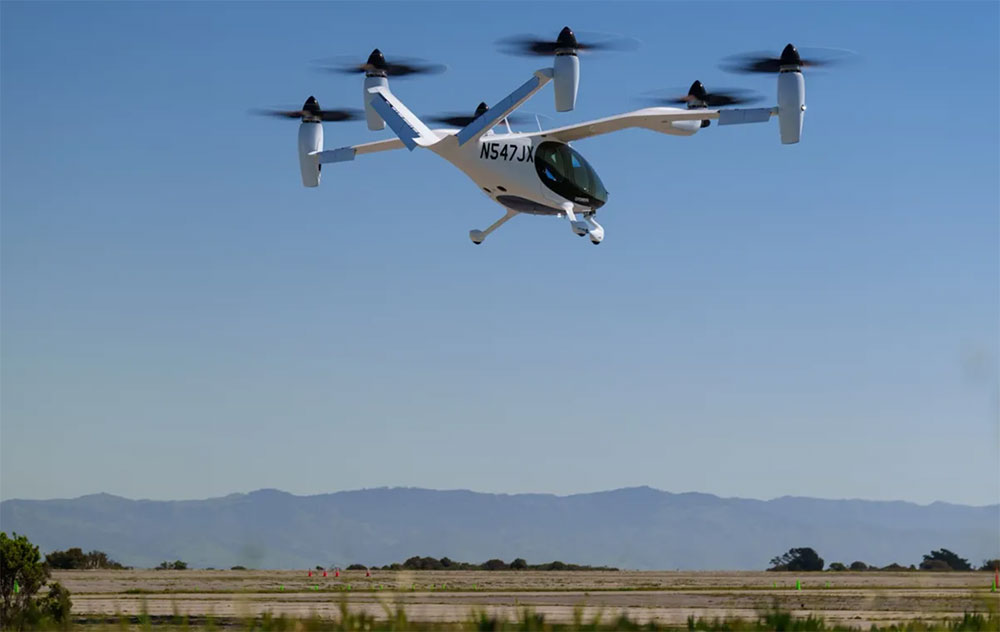
Stage 5, now underway, involves FAA-witnessed compliance flight testing — the Type Inspection Authorization phase — culminating in type certificate issuance if the aircraft performs as certified. Joby's first FAA-conforming aircraft, designated N547JX, began this flight campaign on March 11, 2026. FAA pilots are expected to take the controls later this year. Following type certificate issuance, Joby still requires a separate Air Carrier Certificate before commercial passenger operations can begin, and FAA-approved vertiport infrastructure at each service location.
Papadapoulos will vacate his role before this final compliance flight-testing phase concludes. The institutional knowledge he carries — from certification basis negotiations conducted under Part 21.17(b), to the means of compliance worked out across hundreds of test points, to the working relationships with FAA technical reviewers — represents a category of organizational memory that is difficult to formally document and transfer in the timeframe available between resignation notification and the July 3 effective date.
What the Advisory Arrangement Signals
The planned advisory agreement is not a formality. In high-stakes certification programs, outgoing technical executives who transition into advisory roles serve several practical functions: they provide continuity on open compliance findings that may surface during TIA testing, they remain available to interpret the reasoning behind certification approaches that were adopted before institutional memory was fully codified, and they provide a bridge to external stakeholders — including FAA technical staff — who have developed working relationships with them as the primary point of contact.
The fact that Joby has negotiated for an advisory role rather than a clean break suggests the company is aware of the continuity risk and has taken steps to mitigate it. Whether those steps are sufficient depends on how quickly Stage 5 testing proceeds and how many open compliance findings require senior-level engagement. The FAA has consistently stated that certification schedules depend on applicant performance and the resolution of open findings, which means the degree of Papadapoulos's value in an advisory capacity will be determined partly by technical developments that cannot be fully anticipated at the time of his departure.
Structural Considerations for Joby's OEM Leadership
Joby has not announced a named successor to Papadapoulos as of the date of this writing. This is not unusual in the immediate disclosure period following a resignation announcement, and it is possible a successor is being identified internally. However, the specific nature of the President of Aircraft OEM role — combining certification execution, manufacturing readiness, and OEM economics — means that the replacement decision carries implications across multiple functional domains simultaneously.
The company's vertically integrated manufacturing model, which it has identified as a competitive differentiator, means that aircraft OEM leadership sits at the intersection of design authority, production ramp-up planning, and supply chain oversight. Joby has stated plans to scale from two to four aircraft per month at its Marina, California facility, and its Dayton, Ohio operation is intended to support production of up to 500 aircraft per year for propeller blade manufacturing. Whoever assumes OEM leadership will be accountable for managing that scaling trajectory while simultaneously supporting the final phase of FAA certification.
For the broader advanced air mobility sector, Joby's certification leadership team composition at this moment carries implications that extend beyond the company itself. Because Joby is certifying under Part 21.17(b) — the FAA's mosaic framework for aircraft that do not fit existing airplane or rotorcraft categories — the compliance precedents established through Stage 5 will inform how subsequent eVTOL manufacturers approach their own certification applications. The technical and procedural choices Papadapoulos's team has embedded in Joby's certification record will persist as institutional facts; his departure does not erase them. But the ability to explain, defend, and build on those choices is partly a function of who remains in the room.
Market and Competitive Context
Joby's stock has experienced notable volatility in 2026, trading down approximately 36 to 42 percent year-to-date depending on the reference period, while posting meaningful gains over a 12-month horizon. Analyst consensus as of late April 2026 reflects a Hold rating with an average price target of approximately $13.25, implying material upside from current levels near $9. Several analysts maintain Buy ratings with targets as high as $18, citing the company's regulatory progress, its position in five of the FAA's eVTOL Integration Pilot Program projects, and the forthcoming NYC-area commercial demonstration flights.
The Papadapoulos resignation has been acknowledged in analyst commentary but has not materially shifted the prevailing Hold consensus, likely because the company's certification milestones — the Stage 4 completion, the N547JX flight campaign, the NYC demonstration flights — are viewed as structural positives that outweigh near-term leadership transition risk. Canaccord Genuity reiterated a Hold with a $15.50 price target. H.C. Wainwright maintained a Buy at $18, emphasizing Joby's positioning heading into the eIPP program expected to begin commercial activities this summer.
The competitive landscape provides some context for evaluating the disruption risk. Archer Aviation, Joby's closest U.S. competitor, is in Stage 3 of its FAA type certification process — one full stage behind Joby — and is backed by United Airlines and Stellantis. Wisk Aero is pursuing autonomous operations at a different point in the certification pathway. Lilium GmbH and Volocopter have both entered insolvency. The competitive gap Joby currently holds is measured in regulatory progress, not months on a calendar, but it is a gap that took years of certification investment to establish. Whether the Papadapoulos departure affects Joby's ability to maintain that lead will depend on execution in Stage 5 and the air carrier certification process that follows.
Observations for the Professional Community
The certification process that Papadapoulos has shepherded through Stages 1 through 4 is documented in FAA-accepted certification plans, test reports, and compliance data that do not disappear with his departure. The institutional knowledge risk is bounded by the advisory arrangement and by the depth of team expertise Joby has assembled over five years of intensive testing. The company employs more than 2,000 people globally, and the technical staff executing TIA testing are not dependent on a single executive for their day-to-day work.
The FAA's Stage 5 process includes a comprehensive conformity inspection and operational demonstration that require senior-level engagement with the regulator. Any open compliance findings — and the FAA has given no assurance that Stage 5 will be finding-free — will require authoritative responses from program leadership. The organization's ability to provide those responses coherently, without the officer who managed the preceding four stages, is the central operational question .
Papadapoulos's tenure produced a measurable record: five years from initial certification planning through the completion of Stage 4 conformity review, an aircraft that the FAA has confirmed matches its approved design, and a flight test program that logged more than 9,000 miles in 2025 across three countries. That record stands independent of his continued employment. The question for Joby is whether the organization has internalized the practices and judgment required to carry that record through to a type certificate without him. The answer will be visible in the pace and outcome of Stage 5 testing over the months ahead.