
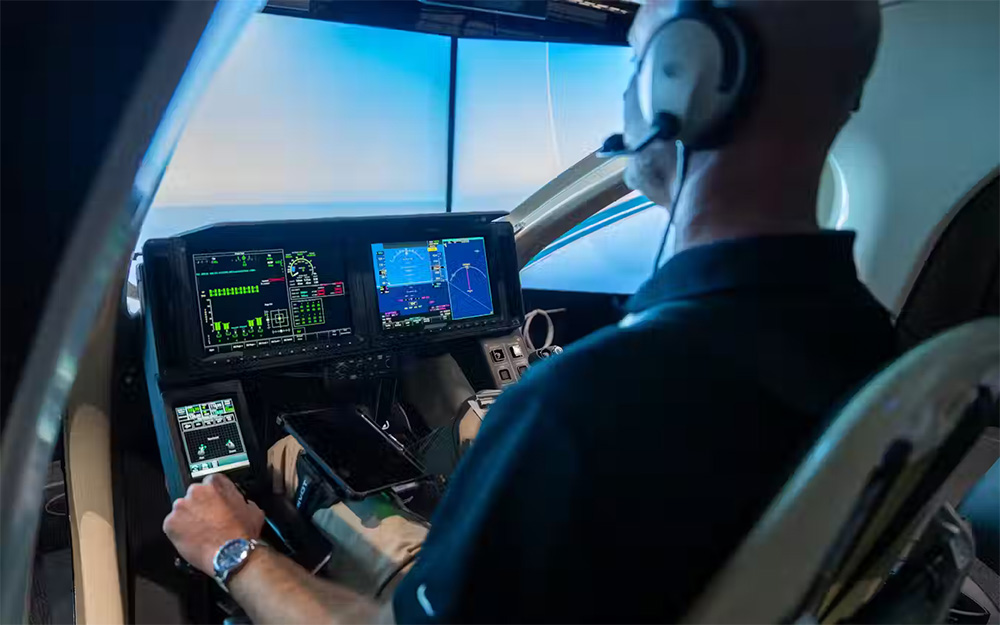
The eVTOL Integration Pilot Program spans 26 states and brings together state agencies, manufacturers, and operators to generate the operational data the FAA needs to build a workable regulatory framework.
The U.S. Department of Transportation (DOT) and the Federal Aviation Administration (FAA) announced on March 9, 2026 the selection of eight projects under the Advanced Air Mobility and Electric Vertical Takeoff and Landing (eVTOL) Integration Pilot Program, referred to as the eIPP. The program, which drew more than 30 proposals from across the country, establishes a structured framework for real-world testing of next-generation aircraft in controlled but operationally representative environments. Operations under the selected projects are expected to begin by summer 2026.
The program originated from an executive order directing federal agencies to accelerate the integration of drone and advanced air mobility technologies into the national airspace system. The selection process was conducted by a technical review team drawn from DOT and FAA,
Scope and Geographic Coverage
The eight selected projects collectively span 26 states, ranging from the Northeast to the Gulf Coast, the Pacific Northwest, the Rocky Mountain region, and the Southern Plains. Each project is anchored by a state or municipal agency, partnered with one or more aircraft developers and operators. The FAA Deputy Administrator Chris Rocheleau noted in the announcement that the program is designed to generate "valuable operational experience that will inform the standards needed to enable safe Advanced Air Mobility operations."
The Port Authority of New York and New Jersey will lead a consortium involving Archer, BETA Technologies, Electra, and Joby Aviation, covering 12 distinct operational concepts across New England. These will include eVTOL passenger operations at the Manhattan heliport — a significant test of how powered-lift aircraft can be absorbed into one of the world's most congested airspace environments.
The Texas Department of Transportation project brings together Archer, BETA, Joby, and Wisk to support regional connectivity between Dallas, Austin, San Antonio, and eventually Houston. The concept envisions air taxi networks expanding outward from each city, with the goal of demonstrating intrastate regional air mobility at a practical scale.
The Utah Department of Transportation project covers four states across the Pacific Northwest, the Rocky Mountains, and Oklahoma, testing a range of aircraft types and operational concepts with partners including Ampaire, BETA, and Joby.
Pennsylvania's Department of Transportation will anchor the NASAO AAM Multistate Collaborative, a 13-state initiative focused on revitalising regional air service in routes that resemble those currently sustained through the Essential Air Service program. Partners include BETA and Electra, with additional participants designated under the eIPP.
Louisiana's project is oriented toward offshore and energy-sector logistics, with operations designed to test cargo and personnel transportation over the Gulf of Mexico and to onshore sites across Louisiana, Texas, and Mississippi. Partners include BETA and Elroy Air.
The Florida Department of Transportation will oversee a phased statewide program with Archer, BETA, Electra, Joby, and others. The three-phase structure addresses cargo delivery, passenger transportation, automation, and emergency medical response, and is described as being supported by substantial public and private co-investment.
North Carolina's Department of Transportation will focus on piloted medical and regional operations across the state, with Joby, BETA, and additional partners, as well as a planned autonomous flight operation extending into Virginia — an early indicator of how cross-border airspace coordination may function in a future AAM environment.
The City of Albuquerque rounds out the eight with a focused autonomous operations project, working exclusively with Reliable Robotics. The project is designed to accelerate advances in autonomous flight in a lower-traffic airspace, building on an existing partnership that is already coordinating with FAA.
Regulatory Significance
From a regulatory standpoint, the eIPP is structured to produce data that directly informs rulemaking. The FAA does not yet have a comprehensive regulatory framework that addresses powered-lift aircraft at commercial scale, and the program is intended to fill that gap through observed operations rather than purely theoretical modelling. Each project is required to contribute operational data back to the FAA, creating a feedback loop between real-world performance and the standards development process.
The range of operational concepts embedded in the program — covering urban air taxi, short takeoff and landing regional transport, autonomous cargo delivery, emergency medical services, and offshore energy logistics — is a deliberate choice. Each use case presents different airspace integration challenges, different infrastructure requirements, and different safety considerations, and the FAA's aim is to draw regulatory lessons across that full spectrum rather than from a narrow subset of applications.
The inclusion of autonomous operations, both in Albuquerque and within the North Carolina-Virginia corridor, is particularly significant for the longer-term trajectory of the industry. Certification pathways for aircraft operating without a pilot on board remain among the most technically and legally complex questions facing the FAA, and early operational exposure under controlled conditions is likely to accelerate that regulatory work.
Industry Participants
The selection confirms the positions of several companies that have been working toward type certification and operational readiness over the past several years. Joby Aviation appears across the greatest number of projects — New York/New Jersey, Texas, Utah, Florida, and North Carolina — reflecting the company's progress toward certification, which it reports is in its final stages. Archer Aviation features in the New York/New Jersey, Texas, and Florida programs. BETA Technologies, which has been notable for its focus on charging infrastructure as well as aircraft development, appears in nearly every selected project.
Wisk, which is pursuing an autonomous air taxi model, is included in the Texas project. Elroy Air, which develops autonomous cargo aircraft for mid-mile logistics, is a partner in the Louisiana offshore program. Electra, which is developing a short takeoff and landing aircraft using blown lift technology, is included in the Northeast, Pennsylvania, and Florida programs — use cases where STOL capabilities offer practical advantages over eVTOL designs in lower-density or infrastructure-constrained environments.
Reliable Robotics, selected solely for the Albuquerque project, brings a background in remotely piloted and autonomous fixed-wing aircraft and an existing operational relationship with the FAA in the region. Its inclusion as the sole partner in that project reflects the program's interest in advancing autonomy as a distinct technical and regulatory challenge.
Timeline and Next Steps
Operations under the eIPP are expected to begin by summer 2026, though the precise pace will depend on each project's readiness, the status of individual aircraft certifications, and the completion of any required infrastructure work at vertiports or landing facilities. The summer 2026 target places the program's early operations within the timeframe outlined in the DOT's AAM National Strategy, which calls for demonstrations and initial operations by 2027 and broader commercial activity in multiple urban and rural areas by 2030.
For professionals in airspace management, aircraft certification, airport planning, and regulatory affairs, the eIPP represents one of the clearest near-term opportunities to engage with how the national airspace system will be adapted to accommodate a fundamentally different category of aircraft. The data generated over the coming years will carry significant weight in shaping certification standards, airspace classifications, vertiport design requirements, and the operational rules that will govern AAM at commercial scale.