
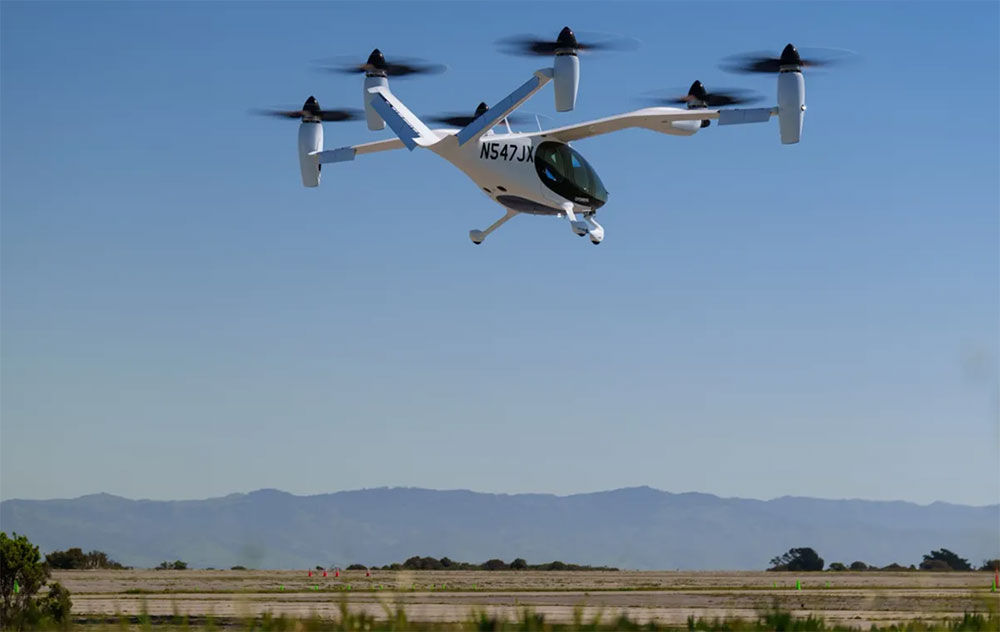
With N547JX airborne at Marina and a presidential pilot programme already in motion, Joby Aviation moves into the final stage of FAA type certification
On 11 March 2026, Joby Aviation announced that it had commenced flight testing of its first FAA-conforming aircraft at the company's test facility in Marina, California. The aircraft, registered as N547JX, is the initial example of a fleet currently in production dedicated to supporting Type Inspection Authorization (TIA) testing — the final structured phase of FAA type certification before an aircraft may enter commercial service.
A conforming aircraft must be manufactured precisely to the intended type design, with airframe and components built to designs approved by FAA Designated Engineering Representatives (DERs). Joby has said that N547JX meets these requirements and was assembled in accordance with the company's FAA-approved test plans. In short, it is not merely a development vehicle but an aircraft whose production process can, in principle, be repeated — a critical precondition for commercial certification.
The TIA phase itself represents a convergence of three parallel workstreams: accepted test plans, a design demonstrated to meet FAA standards, and the demonstrated ability to manufacture that design consistently. Joby indicated that all three were successfully aligned ahead of final assembly.
What TIA Testing Involves
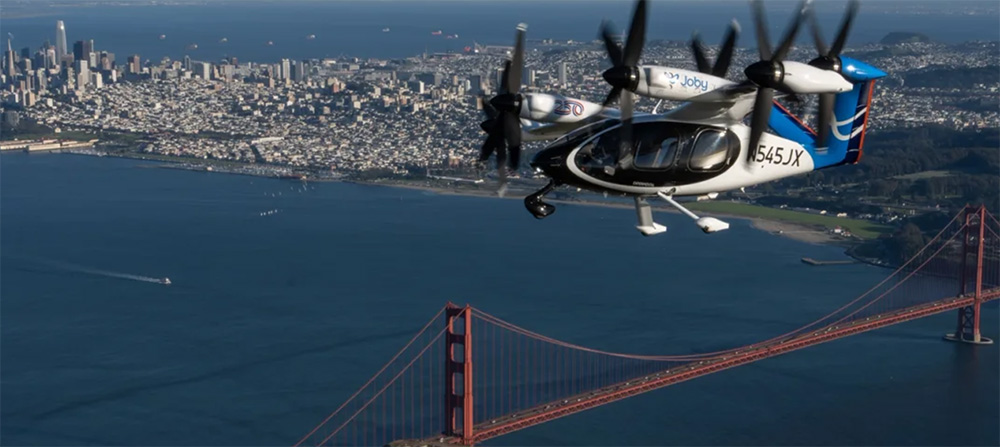
Under the TIA process, Joby's pilots are first to conduct initial flight evaluations, gathering data and validating handling characteristics before FAA test pilots take the controls for 'for-credit' sorties. It is these FAA-piloted flights that formally count toward type certification. Joby has indicated it expects FAA pilots to arrive at Marina later in 2026 to begin that phase.
FAA and company pilots will jointly validate the aircraft's performance envelope — encompassing range, speed, and energy management — under operationally realistic conditions. Flight control and handling qualities will be evaluated across the full regime, from vertical takeoff and hover through the transition to wingborne cruise and back again. The TIA phase also reaches beyond pure airworthiness: maintenance manuals, pilot training curricula, and onboard system reliability will all be assessed as part of the process that will ultimately inform the FAA's determination on whether to issue a type certificate.
Joby's powered-lift S4 aircraft is designed to take off and land vertically, transition to fixed-wing cruise at approximately 200 mph, and return to a vertical landing — a flight profile that draws on both helicopter and fixed-wing regulatory frameworks. A 2024 Special Federal Aviation Regulation (SFAR) established the FAA's approach to regulating powered-lift operations, setting out combined fixed-wing and helicopter rules and defining pilot certification and training requirements for the category.
The Path to This Point
The first flight of N547JX follows a sequence of incremental milestones over the past twelve months. Joby completed a manufacturing facility in Marina during 2025 and began propeller blade production at a facility in Ohio. In November 2025, the company commenced power-on testing of the first conforming aircraft — the hardware and software integration work that precedes first flight. By the time of the March announcement, the company's prototype fleet had accumulated more than 850 flights in 2025.
The eIPP Programme and Pre-Certification Operations
The first flight of N547JX coincides with a separate but related regulatory development. On 9 March 2026 — two days before the conforming aircraft took flight — the U.S. Department of Transportation and FAA announced the selection of eight pilot projects across 26 states under the White House-backed eVTOL Integration Pilot Programme (eIPP), established by Presidential Executive Order. Joby was named as a partner in multiple winning applications, giving it the opportunity to begin limited operations in Arizona, Florida, Idaho, New Jersey, New York, North Carolina, Oklahoma, Oregon, Texas, and Utah this year — ahead of full type certification.
The eIPP is structured to allow mature eVTOL designs to conduct demonstration operations in areas including passenger transportation, cargo delivery, and emergency response, with the FAA and Department of Transportation coordinating alongside state and local authorities to streamline airspace integration approvals. Flights under the selected applications are expected to commence within 90 days of the finalisation of Other Transaction Authority contracts.
Industry analysts have generally maintained cautious projections for the broader eVTOL sector, with several forecasters placing the first commercial entry into service for the category at mid-2027 or later, citing the time required to complete TIA and address any findings arising from for-credit testing. Joby has indicated a 2026 timeline for carrying its first passengers, though the precise form that may take remains contingent on test outcomes and regulatory coordination still to come.
What Comes Next
The current phase of Joby pilot flights is preparatory. The data gathered will be used to refine procedures and confirm that the aircraft behaves within expected parameters before FAA evaluators take the controls. Once TIA flying begins in earnest, the evaluation will proceed in coordination with the FAA's certification team, with findings addressed iteratively before a final determination is made.
For the broader powered-lift certification community, Joby's progress offers a reference point. The FAA has not previously certificated a powered-lift aircraft of this type, and the processes being refined during TIA — from pilot qualification standards to maintenance manual validation — will inform the regulatory framework for the category as a whole. The outcome of Joby's certification, and the timeline on which it is achieved, is therefore of relevance beyond the company itself.